

Bush Bulletin – May 2026
With the winter chill slowly starting to creep in, the bush starts to take on the feeling of the new season. Here are a few of the incredible moments we were able to share with our guests this past autumn.
A Morning of Legacy: Mahetalelo and the Future of the Makwela Lineage
by Morné
There are mornings on safari that stay with you forever and this was one of them. We set off into a cool, misty dawn after hearing the unmistakable sound of a leopard vocalising somewhere in the distance. With reports of a male in the area, we were confident we knew who we were looking for. The plan was simple: Find him. But the bush, as you may know, has its own plans.
As we rounded a bend, my tracker, Ronnie, suddenly locked in on something. Now, if you’ve ever been on safari with us, you’ll know Ronnie as the cool, calm, and collected one. So, when his voice lit up with excitement, I knew instantly that this was going to be something special.
I lifted my binoculars, scanning to find what he had already seen. Then he said it, one word that changes everything out here: “Cubs.”
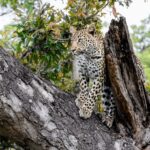
There she was, Mahetalelo, a young female we know well, and a member of the legendary Makwela lineage. And with her, two tiny cubs, no older than eight weeks. Still dark in colour, their rosettes not yet fully defined, they moved through the long grass with an innocence that stopped us in our tracks.
They followed their mother up onto a rocky outcrop, clumsily navigating the terrain as very young cubs do. We sat quietly, watching as they played – tumbling over one another, chasing tails, and occasionally turning their attention to Mahetalelo, who patiently groomed them and kept a watchful eye on her surroundings. It was more than just a sighting; it was history unfolding in front of us.
Mahetalelo’s story is deeply tied to this land. Her lineage traces back to a female who denned behind what is now Room 8 at Leopard Hills, nearly 28 years ago. And now, here she was continuing that legacy less than two kilometres from the lodge. A full-circle moment. A homecoming.
The emotion in the vehicle was undeniable. Between Ronnie and myself, words failed us. Our voices carried a mix of excitement and disbelief, and in that moment, I’m quite sure our guests could feel it too. These are the sightings that remind us why we do what we do. The privilege of witnessing something so raw, so rare, and so deeply connected to the land we call home.
For me, it was overwhelming. The kind of moment that sneaks up on you and leaves its mark long after the engine is turned off.
And as those two small cubs played in the morning light, it was impossible not to feel hopeful for the future of the Makwela lineage, alive and thriving, right here where it all began.
A Visit From an Old Friend "The Gentle Giant"
by Johan
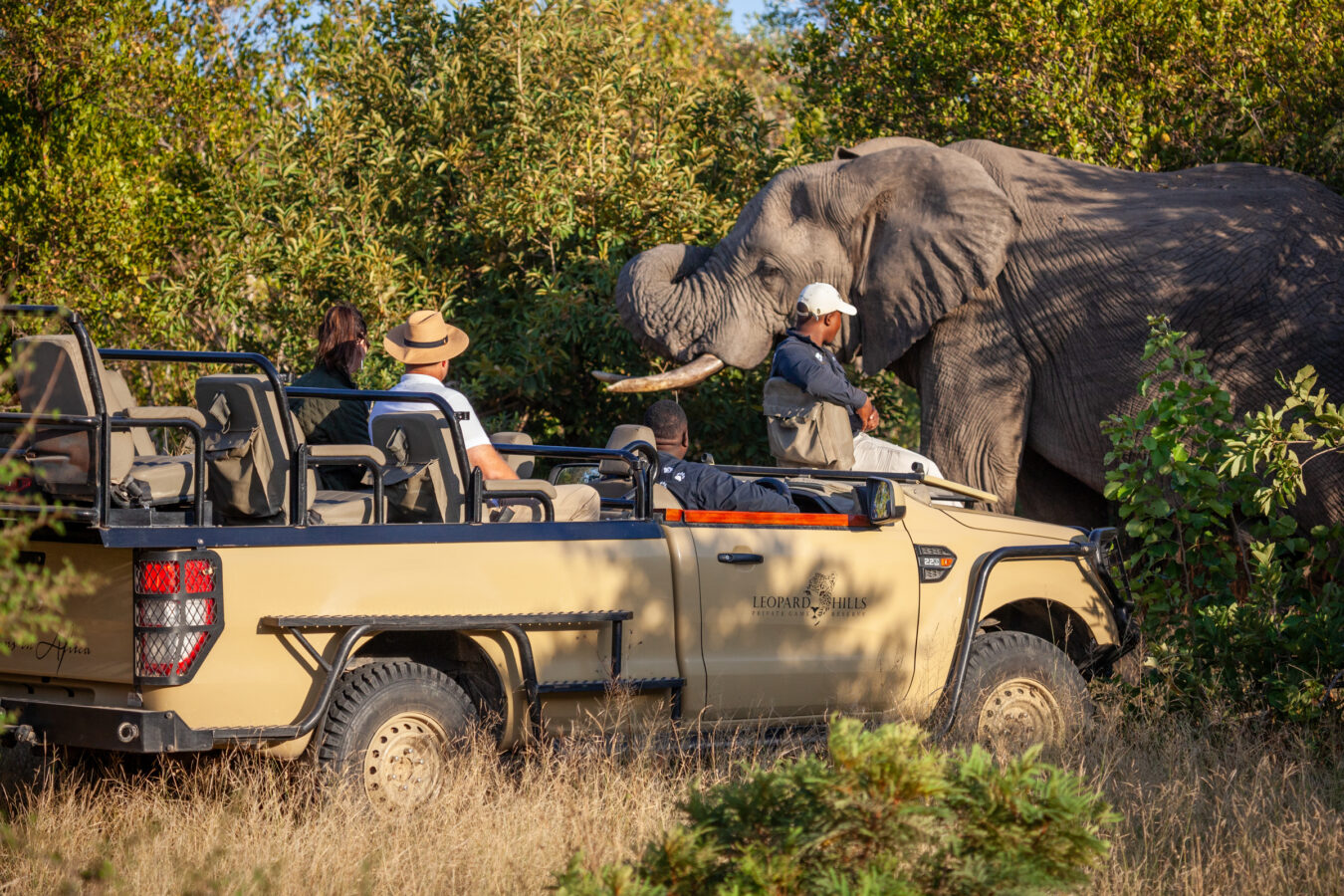
There are some sightings in the bush that stay with you forever, and then there are moments like this, when an old giant appears around the bend in the road as if he owns every grain of dust beneath his feet.
This magnificent big tusker moved with the calm confidence that only age and experience can bring. Every wrinkle on his face tells a story. Every slow step carries decades of survival through droughts, battles, changing seasons, and countless journeys across the Lowveld. Standing in his presence is a reminder that these elephants are not just animals, they are living history.
What makes encounters like this even more special is the feeling of familiarity. After years in the bush, certain elephants become more than just sightings on a game drive checklist. They become old friends. You begin to recognize the shape of the tusks, the way they carry their trunk, the scars on their ears, and the calm energy they bring with them.
Seeing him again felt less like a random wildlife encounter and more like receiving a visit from a respected elder of the bushveld.
There was no rush in his stride. No fear. No aggression. Just a quiet reminder that true strength never needs to announce itself loudly.
As he approached the vehicle, the world seemed to slow down. The sound of his footsteps in the sand, the dust lifting beneath his feet, and the sheer scale of him up close is something impossible to fully capture in words or photographs. Moments like these are why we spend time in the wild, not only to see animals, but to feel connected to something far older and greater than ourselves.
Big tuskers are becoming increasingly rare across Africa, which makes every encounter deeply valuable. Bulls like this carry incredible genetics, wisdom, and presence. To witness one at close range is a privilege few people truly understand until they experience it themselves.
And perhaps that is what makes this sighting so memorable: It did not feel like we found him; it felt like he came to visit us.
For a brief moment on a dusty safari road, the bush introduced us once again to one of its oldest and most majestic kings.
Prides of the West
by Michael
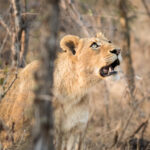
With recent changes in the Bateleur Pride, previously known as the Ximungwe Pride, we are extremely excited to announce the birth of three beautiful lion cubs in the Western Sector. Two males and one female, presumably the offspring of the Plains Camp males. The cubs were born around mid- to late March, and over the past two months we’ve been trying to give them as much space as possible to become familiar with their new home.
After the long-anticipated wait, their mother is finally ready to show them to the world.
My first sighting of them was only a couple of weeks ago, on the 24th of May. The sun was peeking over the treetops, and one could only describe it as “golden hour”. While making a slow approach through the guarri-packed thickets in front of the vehicle, my tracker, Advice, spotted one of the adult females. Then, out of the tall grass, came the cutest ball of fur you could possibly imagine. Finally, we had found the cubs!
An overwhelming sense of joy and emotion filled the vehicle, not quite sure whether to laugh or cry. My guests were, of course, over the moon with the sighting, and so was I.
We spent a good amount of time with them and already got a glimpse of their personalities beginning to form at such a young age. It was truly a wonderful sight to witness.
Even though the Sabi Sand is world-renowned for incredible sightings like this, it’s never guaranteed that you’ll see these special animals. There are so many factors that contribute to their success and survival. Their mother had great success raising her previous litter, and ultimately all we can do is hope that she does the same with these three. As they say, time will tell…
For now, stay tuned for some incredible moments spent with them on safari. Here is a shot I managed to capture before we left them.
Waterbuck Musk and Life Saving Swims
by Justin
There are few antelope in the bushveld that carry themselves with quite as much confidence as a mature male Waterbuck. While impalas dart nervously through the thickets and wildebeest seem permanently confused, the waterbuck strolls through the landscape as though he owns every drainage line, mud wallow, and reed bed in sight. And to be fair, when you look as majestic and regal as this guy, you probably do!
With his shaggy grey-brown coat, impressive curved horns, and unmistakable white ring around the tail (often compared to a toilet seat by many generations of safari guides before me, because a classic is a classic for a reason), the male waterbuck is one of the true gentlemen of the African bush. Rugged, handsome, and permanently dressed for winter, looking like a fluffy “bush donkey”, he cuts a striking figure against the golden grasslands of the Lowveld.
At this time of year, many of the dominant males are in spectacular condition. Their thick necks and muscular shoulders give them an almost regal appearance as they patrol territories near water sources, keeping a close eye on both rival males and nearby females. Unlike some antelope species that rely on sheer speed and panic to survive, waterbucks prefer a calmer, more calculated approach to life. Their first choice when threatened? Go for a swim.
And that’s where their name comes from. Waterbucks are never found too far from permanent water and are excellent swimmers when necessary. Lions and wild dogs often think twice before following them into deeper channels or flooded areas. In many ways, water is their safe haven, although one suspects it’s also a convenient excuse to avoid cardio.
Another fascinating fact about waterbucks is their oily coat secretion, which gives off a rather distinctive smell. Some describe it as musky… others less kindly compare it to a damp rugby jersey left in a gym bag for several weeks. This natural oil serves an important purpose, helping waterproof their fur when escaping through marshy areas and wet habitats.
Male waterbucks are also surprisingly territorial. Dominant bulls will defend prime habitat areas, often standing broadside to rivals in dramatic displays before engaging in clashes with their long spiral horns. Fortunately for photographers and safari guests, this posturing usually looks far more aggressive than it becomes. Much like two middle-aged men arguing over whose soccer team is better, there is often a lot of snorting, staring, and puffed up body language involved.
Yet despite their size and imposing appearance, there is something wonderfully peaceful about encountering a waterbuck bull in the wild. Perhaps it’s the slow careful movements, the calm gaze, or the quiet confidence they exude while feeding along the riverbanks. In a bush filled with chaos, alarm calls, and endless territorial disputes, the waterbuck seems to operate on his own schedule entirely.
So next time you encounter one of these magnificent antelope on a drive, take a moment to appreciate the majesty of the male waterbuck. Beneath the shaggy coat, suspicious odor, and questionable tail markings, lies one of Africa’s most charismatic and underrated icons.
Stay With Us
If you’re interested in experiencing an awe-inspiring South African safari, please don’t hesitate to get in touch with our reservations desk at book@leopardhills.com.
Alternatively, click here and make use of the quick and seamless online booking process and start planning your ideal vacation today.
We look forward to welcoming you to Leopard Hills Private Game Reserve.