

Alarm Calls of the Bush: 5 Animals That Know a Predator is Near
The bush has a unique language all its own. When we slow down on safari and begin to tune into our surroundings, we realise that animals have a way of communicating with each other. Some calls, though made by a bird, for instance, are universally understood by all prey animals: Danger!
On your Leopard Hills safari, you will go on twice-daily game drives with your ranger, where much of what they do is interpret the signs of the bush to present you with extraordinary sightings. Sometimes you will follow tracks, sometimes you will follow a well-known trail, and sometimes you will follow a sound; a blaring alarm set off by animals that are always on the alert.
The remarkable thing is that these signals cross species lines. An impala responds to a baboon’s bark. A bird reacts to a vervet monkey’s call. Over millennia, the animals of this ecosystem have learned to read one another’s warnings
Here are a few of the best-known “bush alarms” in the Sabi Sand Nature Reserve; animals who give away the presence of predators that would prefer – for obvious reasons – to stay hidden.
1. The Fork-Tailed Drongo
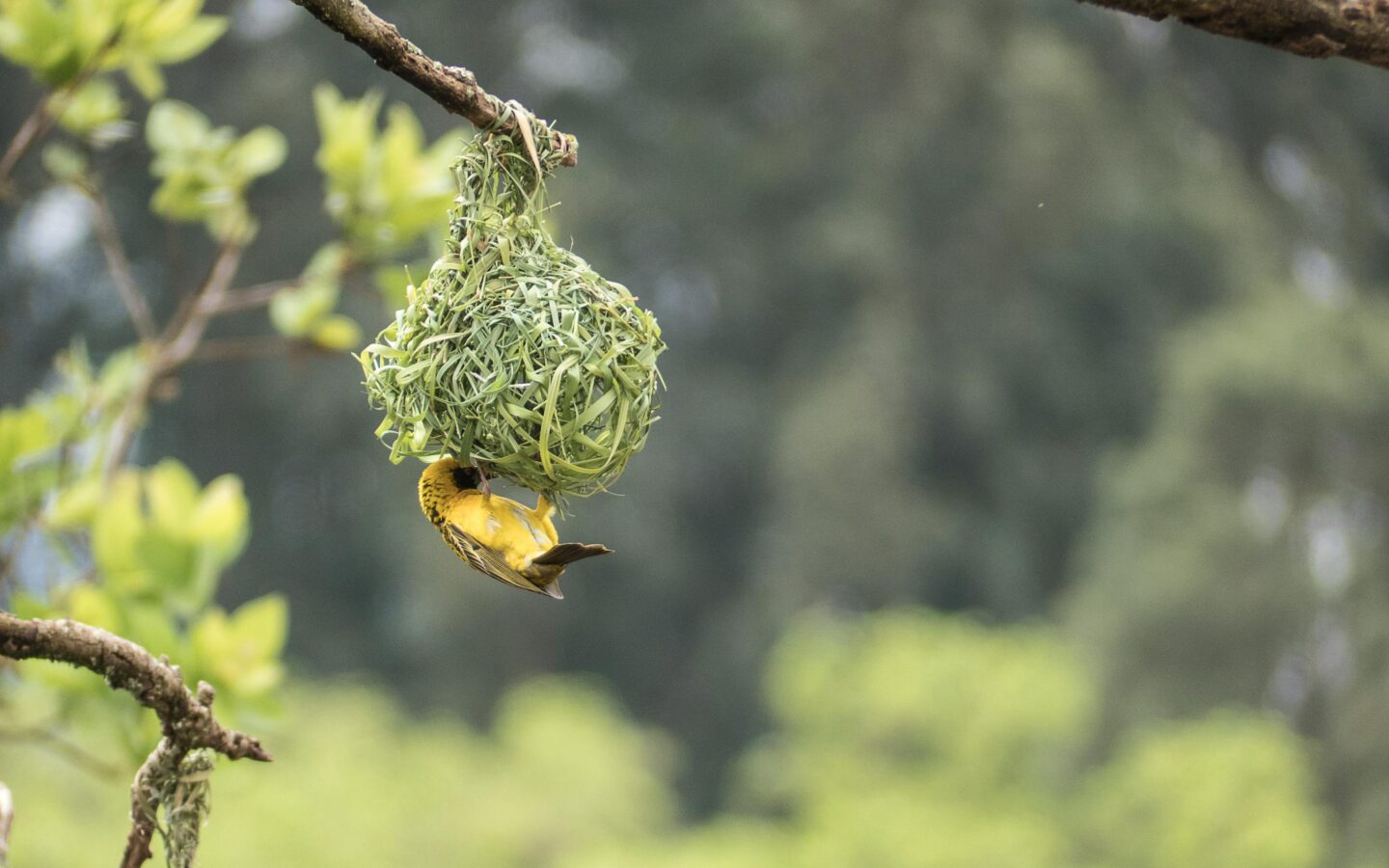
Small, glossy black, and seemingly incapable of keeping quiet, the Fork-tailed drongo is a prolific predator-thwarter in the Sabi Sand Nature Reserve; even known to mob eagles and harass hornbills!
When a drongo locks onto a predator – a leopard moving through the grass or a snake crossing a path – it follows it, calling persistently, broadcasting the animal’s location to everything within earshot like a living geo-locator.
Maybe the Fork-tailed Drongo has a personal vendetta against anything that hunts, but our guides reckon that an agitated drongo is always worth following.
2. The Impala
Impala are the most numerous antelope in the Sabi Sand, and with this abundance comes a corresponding vigilance. Many eyes and ears and all that…
You might have noticed that a herd of impala is never fully at ease. At any given moment, several individuals will have their heads raised, ears pricked and nostrils testing the air while the others graze. They rotate this “lookout” naturally, ensuring there are always individuals keeping a keen eye on the surrounding bush.
The alarm snort, when it comes, is like a sharp, explosive exhalation, carrying across the herd, triggering every animal into immediate and instinctive action. Better to run first and ask questions later – that’s the way of flight animals.
When a herd of impala suddenly bunches and stares fixedly in one direction, your ranger is already looking there too.
3. The Vervet Monkey
What makes the vervet monkey’s alarm system remarkable is its specificity. These small primates produce distinct calls for different predators. In other words, their call for a leopard sounds different from the one they make for an eagle, and different still from the one they make for a snake.
Each call triggers a different response in other vervets nearby. A leopard alarm sends them into the trees; an eagle alarm sends them to the ground.
What’s interesting is that animals from other species, like impala, baboons and birds, have also learnt to understand the vervets’ calls. On a Leopard Hills safari, the sound of vervets erupting in the trees above a riverine thicket is one of the most reliable indicators that a large predator is somewhere beneath them.
4. The Oxpecker
The red-billed and yellow-billed oxpeckers spend their lives on the backs of large mammals – buffalo, rhino, giraffe, elephant – hanging out and feeding on parasites and dead skin. As charming as this sounds, it’s a mutually beneficial arrangement (symbiosis), and one with an unexpected bonus: The birds serve as a permanent, mobile alarm system for their hosts.
When oxpeckers take sudden, simultaneous flight from an animal’s back, hissing as they go, it almost always means one thing: Something has changed in the immediate environment, like the sudden appearance of a predator.
The animal they were perched on responds in kind. You will see the buffalo raise its head, or the rhino turn. Unlike impala, large mammals don’t need to panic quite as quickly, and they know it.
Whether the threat warrants immediate action or not, watching the interaction between oxpecker and host is one of the more quietly rewarding aspects of a Leopard Hills safari.
5. The Baboon
There is nothing subtle about a baboon’s alarm call. A deep, repetitive bark (wa-ho, wa-ho) carries across the surrounding bush with the subtlety of a shotgun. When a troop of baboons erupts from the trees in a cacophony of barks and screams, every animal within half a kilometre is paying attention.
Baboons are particularly vocal about leopards, and with good reason, since leopards are one of their primary predators. A troop that has located a resting leopard will sometimes keep it under noisy surveillance for an hour or more, broadcasting its position to the entire reserve. For a guide, the sound of baboons barking persistently from a fixed location is among the most valuable pieces of intelligence the bush provides.
Stay With Us
The beauty of a Leopard Hills safari is that every game drive offers the opportunity to learn. Pay close attention to your guide, and lean into your own senses – you’ll be amazed by how quickly the human body remembers its own instincts.
To find out more about your stay in the Sabi Sand Nature Reserve, reach out to our reservations team at book@leopardhills.com or enquire online.
We look forward to introducing you to a wilderness that speaks in many voices!