

Bush Bulletin – June 2026
While the winter chill has certainly found us, bringing crisp mornings and evenings spent wrapped in blankets with a hot water bottle close at hand, it has done nothing to freeze the incredible sightings we have been fortunate enough to share with our guests.
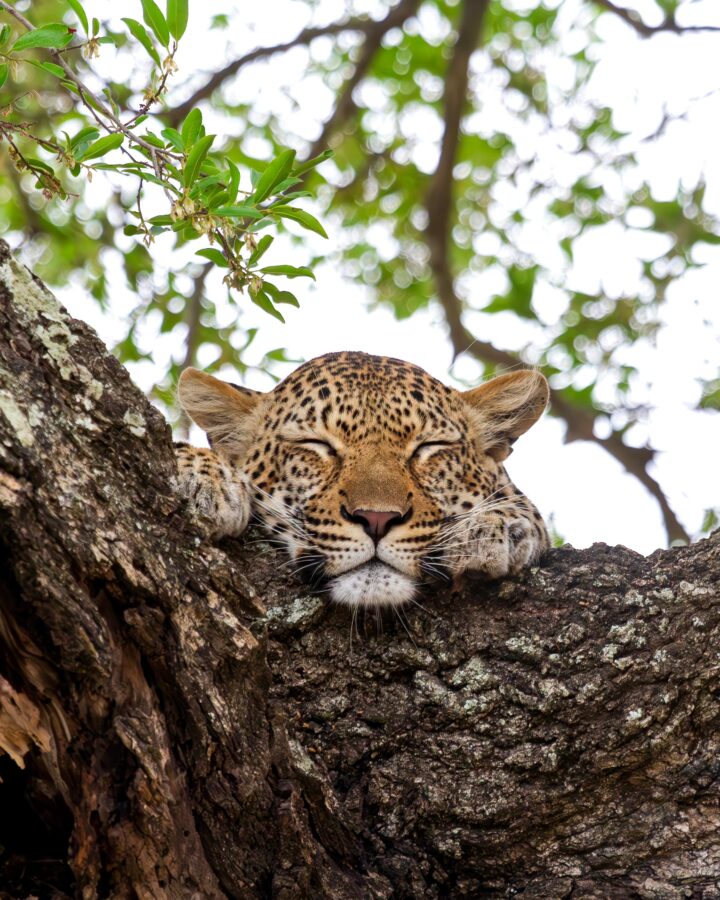
Rixaka: A Leopard in Golden Light
by Morné
There are sightings that unfold like a slow exhale and then there are moments that remind you exactly why the bush demands your full attention.
It began with uncertainty. Scattered impala alarm calls drifted across the clearing, fragmented and unsure not the sharp, rhythmic bark of an animal with a fixed location in its sights, but something more restless. Something that suggested a predator moving through the landscape without urgency, unhurried and unbothered. We slowed. We listened. We waited.
It was our tracker whose eyes cut through the golden haze first, picking up the telltale silhouette across the open clearing a shape that didn’t belong to the grass. Rixaka.
A Leopard on Her Own Terms
Rixaka is one of those leopards that makes you acutely aware of your own stillness. She moves through the bush as though the landscape was built around her, each step deliberate, each pause intentional. On this afternoon, she gave us everything. She climbed a termite mound pausing at the apex, scanning her world from above with those pale, gold-flecked eyes. She navigated the skeleton of a dead tree, threading through the bleached branches with a casual grace that no photograph can fully capture. And then, in a moment that silenced the entire vehicle, she simply walked past the car close enough to hear the soft rhythm of her breathing, close enough to feel the quiet weight of sharing space with something truly wild.
The Magic of Golden Hour
The late afternoon light did what only the African bush can do. It poured across the savanna in long, warm columns, catching the rosettes on Rixaka’s coat and turning them into something almost molten black against amber, shadow against flame. Every termite mound she crested became a stage. Every dead tree she navigated became a frame. Sightings like this one are not manufactured. They are earned through patience, through the skill of a sharp-eyed tracker, and through the quiet willingness to sit with the unknown and let the bush reveal itself in its own time.
Rixaka reminded us of that on this golden June afternoon.
A Morning with the Dwarf Mongoose
by Johan
Some wildlife sightings leave a lasting impression because of their size, power, or rarity.
Then there are those special moments that simply make you smile. Watching a group of playful dwarf mongooses on a game drive is one of those experiences.
As we rounded a bend in the road, movement caught our attention. A pair of dwarf mongooses had ventured out into the open and were completely absorbed in their own little world. Standing upright on their hind legs, they appeared to be sparring, wrestling, and testing each other’s strength in a playful contest.
The tiny mammals seemed oblivious to our presence. One mongoose stretched up tall, mouth open in what looked like a mock challenge, while the other reached forward with its paws as if accepting the invitation. Their antics were full of energy and character, providing endless entertainment for everyone watching.
Dwarf mongooses are Africa’s smallest carnivores, but what they lack in size they make up for in personality. Living in close-knit family groups, they spend much of their day foraging together, keeping watch for predators, and engaging in social interactions that strengthen the bonds within the group.
Play fighting such as this is an important part of their development, helping younger animals learn skills they will need later in life.
What made the sighting even more memorable was the sense of joy it brought. In a wilderness often dominated by lions, elephants, and leopards, it was these tiny creatures that stole the show. Their playful behaviour was a reminder that some of the most rewarding moments in nature come from slowing down and appreciating the smaller stories unfolding around us.
As the sun warmed the sandy road, the pair eventually ended their bout and scampered back towards the safety of their family group. The encounter lasted only a few minutes, but it left us with a wonderful reminder of the charm and character that make the African bush so special.
The next time you’re out on a game drive, don’t just look for the giants. Take a moment to watch the little creatures too. You might just find that a pair of playful dwarf mongooses provides one of the most memorable sightings of the day.
A Dog Show at the Airstrip
by Justin
There are few sightings in the bush that ignite quite the same excitement as a pack of African wild dogs on the move. Every second feels unpredictable, every change in direction keeps you guessing, and if you’re lucky enough to keep up, you’re treated to one of Africa’s greatest wildlife spectacles.
Recently, guests at Leopard Hills were fortunate enough to witness exactly that when the Ottawa Pack burst onto the airstrip, choosing the runway over the surrounding roads and game paths. One after another, they streamed down the centre line with effortless purpose, ears pricked, tails swaying, and that unmistakable loping gait carrying them across the landscape. For a few unforgettable minutes, it felt as though the airstrip had been built exclusively for them.
Wild dogs are among Africa’s most accomplished predators, boasting hunting success rates of over 80% far surpassing those of lions or leopards. Rather than relying on brute strength, they depend on remarkable teamwork, stamina, and communication. Every member of the pack has a role to play, making them one of the continent’s finest examples of cooperation.
Sadly, the Ottawa Pack has also recently endured a devastating setback. Their alpha female and her entire litter were lost when lions discovered the den, a harsh reminder of the challenges these endangered predators face every day. Lions are one of the greatest threats to wild dogs, particularly during denning season when vulnerable pups are unable to flee and the adults face impossible decisions.
As heartbreaking as these moments are to witness, they are also part of the delicate balance that shapes life in the bush. Nature offers no guarantees, even for its most remarkable inhabitants.
Yet if there is one thing wild dogs embody, it is resilience. They are survivors through and through. Packs adapt, individuals step into new roles, and life continues to move forward. Despite this loss, the Ottawa Pack remains a vibrant part of the Sabi Sands, and there is every reason to believe they will continue to hunt, thrive, and, in time, raise another generation.
Watching them disappear down the runway that morning was a fitting reminder of their spirit. Always moving. Always searching. Always together. Their journey continues, and we look forward to following every step of it as the Ottawa Pack writes its next chapter in the Sands.
What a Pearler
by Michael
As a combination of a passionate photographer and nature lover. We often find ourselves in some interesting situations to say the least. Sometimes it’s crawling through muddy waters to capture a waterbird in flight. Other times you’re lucky enough for the opportunity to present itself to you, just like this following sighting…
It was the 15th of June at around 07:30 in the morning. I was on standby for a leopard sighting not too far away when my eye caught something a little out of place. I quickly realised this wasn’t any old bird. This was a Pearl-Spotted Owlet! A bird that I’ve been trying to photograph for about 4 years. Every time the opportunity presents itself, I’ve always been too slow to get the shot, and the bird would fly off…
“Not today!” I said and quickly picked up my camera and just started snapping away, luckily capturing the moment before the bird flew off. This was probably one of my more exciting moments I’ve had this year. I was over the moon for the majority of the drive because of it.
Pearl-Spotted Owlets are incredible little creatures, being one of Africa’s smallest owls we often underestimate them. Don’t let this 75-gram bird fool you!
They are excellent hunters, boasting pretty unique “false eyes” on the back of their heads to trick predators and create the illusion that they are constantly staring at the potential predators. Because they’re mainly diurnal animals, we often hear their unique sounding call and find smaller insectivorous birds mobbing (dive bombing) them
Needless to say, these birds are pretty great if you’re into feathered creatures. Keep an eye out for them on your next safari!
Stay With Us
If you’re interested in experiencing an awe-inspiring South African safari, please don’t hesitate to get in touch with our reservations desk at book@leopardhills.com.
Alternatively, click here and make use of the quick and seamless online booking process and start planning your ideal vacation today.
We look forward to welcoming you to Leopard Hills Private Game Reserve.