

Bush Bulletin – March 2026
With autumn creeping its way into the Southern Hemisphere, it’s been an exciting month here in the Sabi Sand Nature Reserve. Basile gave birth to a new cub, we witnessed Hlambela catching an impala, the Jones family captured some incredible photos during their time with us, and much more…
An Independent Life
by Justin
In the wild, there are moments that feel almost suspended in time – quiet, unassuming, and easy to settle into. And then there are moments that erupt without warning, reminding us just how dynamic and unpredictable the bush truly is.
What began as a peaceful sighting quickly transformed into something far more intense. The young Vutomi (meaning Life due to being Basile’s only cub to survive and make it to maturity) had been found resting in the long grass, his golden coat blending seamlessly into the deep greens around him. His anxious behaviour was evident by the fact that he never fully relaxed and kept looking around as if expecting something or someone to arrive.
But calm rarely lasts long in the bush. Without warning, the atmosphere shifted. The dominant Euphorbia male, Vutomi’s father, had arrived. Vutomi became alert, his body language tightening as he sensed what we could not yet see.
When Euphorbia emerged, there was a brief moment of hesitation. Vutomi approached cautiously, almost respectfully but it didn’t last. Before we could even comprehend what was going on, Euphorbia charged. What followed was a blur of power and movement. The two leopards raced around our vehicle twice, deep growls echoing through the air, before colliding in a tight, rolling ball of rosettes and raw instinct.
As quickly as it began, it was over. Vutomi broke free and scrambled up a nearby tree, revealing a duiker kill hidden in the branches. What had seemed like a resting spot was, in fact, a carefully chosen feeding site.
Below, Euphorbia lingered with residual growls slipping out as if uncontrollable, but resolute. The message had been delivered.
Drawn in by the commotion, three hyenas soon arrived, adding another layer of tension. We left Vutomi feeding as quickly as he could, knowing both time and circumstance were against him.
Encounters like this offer a rare glimpse into leopard behaviour. As solitary animals, interactions between males are uncommon and often aggressive. As young males mature, they are pushed out of their father’s territory. This was one of those defining moments, a clear sign that Vutomi’s independence is being reinforced for him.
What makes a sighting like this so special is its rarity. Across most of their range, leopards are elusive and seldom seen, let alone observed in such raw, intimate interactions. Here, we are privileged to witness these moments unfold.
A powerful reminder of just how special this place is and how, in a single sighting, the bush can tell a story of tension, survival, and change.
Nkuhuma Heirs on the Edge: A Brother and Sister’s Fight for a Future in the West
by Morné
Their story begins with a twist. They were sired by the Plains Camp males right at the moment those males began to take over territory in this part of the reserve. Their mother was effectively mating with a different coalition to the one that was dominant at the time, and that choice changed the course of all their lives. Breaking away from the main Nkuhuma pride, she raised these two cubs alone, always on the move, always just a step ahead of danger.
About two years ago, she disappeared. Since then, these two youngsters have had to read the bush for themselves. They have quietly navigated through multiple rival prides and coalitions, learning when to hide, when to move, and when to stay invisible. Against the odds, they now seem to have settled in their father’s territory here in the west, living in the shadow of the very males that once shaped their existence from a distance.
On paper, that sounds like a safe ending: a son and daughter back in their father’s land. In reality, it is anything but simple. For the young male, time is running out. At his age, he is no longer seen merely as a son; he is becoming a potential competitor. If the Plains Camp males catch him here, he will almost certainly be chased, and the confrontation could turn deadly. His presence is a direct challenge to the order that keeps a coalition in control.
For his sister, the picture is more complicated, but slightly more forgiving. Lions can inbreed safely for around three generations, so her fathers would likely tolerate her here as another potential mate and future mother of their cubs. Where her brother represents risk, she represents opportunity: fresh genetics for a pride already tied to their bloodline.
So, every time we find these two moving quietly through their father’s territory, we are watching a tightrope act. A young male trying to hold onto a home that may soon reject him, and a young female whose future could remain rooted right here. Together, they embody what makes lion dynamics so compelling in this landscape: power, risk, family, and the thin line between belonging and being pushed out.
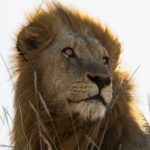
Pride Rock "Lying like Royalty"
by Johan
There are moments in the African bush that feel almost too perfect to be real: quiet, powerful, and timeless. Watching the Bateleur Pride stretched out across a sun-warmed rock is one of those moments.
Perched above the surrounding bushveld, these lionesses embody both elegance and authority. Their choice of resting place is no coincidence. Elevated rocks like this serve as natural vantage points, offering a cool breeze, safety from disturbance, and a commanding view of their territory.
From here, they can watch the world pass by, with antelopes moving through the scrub, birds drifting across the sky, and perhaps even catch a glimpse of the distant signs of potential prey. What stands out most is their calm.
Lions spend up to 20 hours a day resting, conserving energy for the bursts of intensity required during a hunt. In this stillness, however, there is no weakness only quiet strength. Muscles lie relaxed, but ready. Eyes drift half-closed, yet remain aware. Even at rest, they are the undisputed rulers of their domain.
The bond between pride members is also evident in moments like these. Close proximity, relaxed postures, and the subtle glances exchanged all speak of trust and social cohesion. These are not just individuals, but a family, one that hunts together, protects territory together, and raises cubs together.
Scenes like this remind us why time in the bush is so special. It’s not always about the chase or the drama, but about witnessing the everyday lives of these magnificent animals. The quiet hours. The in-between moments. The simple act of lions resting on a rock, owning their space without effort.
As the day cools and shadows begin to stretch, this peaceful scene may shift. The pride will rise, stretch, and melt back into the bushveld, transforming from resting royalty into silent hunters of the night. Until then, they remain exactly as they are here: still, watchful, and utterly magnificent.
Creatures of the Night
by Michael
Typically, our game drives take place during the day, when the bush is filled with light and animals are easier to spot. As the sun sets, though, the atmosphere changes completely. The nocturnal world begins to wake up, and the sounds around you shift into a chorus of crickets, frogs, and distant calls in the dark. Among the many “creatures of the night,” one group that always seems to capture guests’ attention is the owls.
Owls are not just any birds – they are remarkably specialized predators. Over millions of years, they’ve evolved into incredibly stealthy and successful hunters. Their wings and feathers are adapted to break up air turbulence and muffle sound, allowing them to fly almost silently through the night. This means they can listen for the slightest movement, then glide in and catch virtually any small animal that will fit into their talons, often before the prey even realizes they are there.
One of the things guests find most fascinating is the way owls can turn their heads so far it almost looks impossible. They can rotate their heads up to about 270 degrees thanks to several clever anatomical adaptations. These include 14 neck vertebrae (double what we have), highly specialized neck joints, and elastic blood vessels that keep blood flowing to the brain and eyes during extreme rotations. All of this compensates for their large, tube-shaped eyes, which are fixed in place and cannot move in their sockets. The result is superb low-light vision and depth perception, perfect for a nocturnal hunter.
It’s easy to understand why people are so drawn to these birds. They are silent, efficient, and beautifully adapted to life after dark. On your next evening safari, take a moment to scan the trees and listen carefully; with a bit of luck, you might just spot an owl watching the night unfold alongside you.
Shadows, Rivals, and the Unseen Battle
by Dieter
There are days in the bush that unfold gently… and then there are days like this, when every moment feels guided by something far wilder than chance!
We set out with a quiet sense of anticipation, the kind that lingers when you know the bush is holding secrets just out of sight. Before long, we found the Thamba male leopard on patrol along the western edge of his territory. It was a compelling sighting, especially knowing that the Ntomi male had been seen in the same area the day before. The possibility of overlap and confrontation hung in the air.
We left Thamba moving steadily through the bush and paused to take it all in. But as so often happens out here, stillness never lasts for long. The radio crackled to life: Ntomi had been spotted close to where we’d left Thamba…
Instinct took over. We turned back immediately, anticipation building with every meter. By the time we arrived, Thamba had already moved off. Only the distant sound of his rasping call drifted through the trees.
We stayed with Ntomi as the bush settled around us once more. And then, everything changed. An alarm call shattered the calm – sharp, urgent, and repeated. An nyala.
Moments later came something even more chilling: a high-pitched, desperate cry. A baby in distress. Ntomi locked onto the sound, and without hesitation, we moved to investigate.
What we found was extraordinary: A python coiled tightly around a small nyala calf, its work already done. The struggle was over. The scene was raw and humbling – nature in its purest, most unforgiving form. We sat in silence, fully aware of how rare this moment was.
But the story was far from over. Ntomi was approaching.
Drawn by instinct, scent, and opportunity, he moved in cautiously, each step measured, eyes fixed on the python and its kill. The python held its ground, still wrapped around the nyala. For a moment, time seemed to stand still: two formidable predators facing off over a single prize.
Then, without warning, the tension snapped. The leopard lunged.
In an instant, the python reacted – tightening, striking, defending. Ntomi countered with precision, driving powerful forepaws down toward the python’s head. It was fast, chaotic, and primal. A clash of instinct and survival.
Slowly, the balance shifted.
On land, the python was no match for the leopard’s speed and agility. Bit by bit, it began to retreat, uncoiling from its hard-won meal before slipping back into the undergrowth and vanishing as silently as it had appeared.
Ntomi stood alone, victorious.
Without hesitation, he claimed the nyala. Lifting it effortlessly in his jaws, he carried it across an open clearing and into thicker cover, seeking safety, solitude, and a quiet place to feed undisturbed. Just like that, it was over.
We sat in stunned silence, trying to process what we had witnessed. Two rival leopards. A python’s kill. A confrontation between apex predators. A sequence so rare, so raw, it felt almost unreal.
This is the magic of the wild.
Days like this remind you that out here, you are not merely observing nature – you are stepping into a story that is always unfolding, whether you are there to see it or not.
And sometimes, if you are incredibly lucky, you witness something few ever will.
Stay With Us
If you’re interested in experiencing an awe-inspiring South African safari, please don’t hesitate to get in touch with our reservations desk at book@leopardhills.com.
Alternatively, click here and make use of the quick and seamless online booking process and start planning your ideal vacation today.
We look forward to welcoming you to Leopard Hills Private Game Reserve.