

Bush Bulletin – November 2025
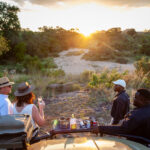
November invites still mornings, dramatic skies, and the heady scent of wild sage after rain. It’s a time of change and abundance, when every game drive holds the promise of something extraordinary. Welcome back to Leopard Hills, where nature’s rhythm sets the pace for unforgettable safari moments.
As the first rains of summer sweep across the Sabi Sand, Leopard Hills transforms into a scene of vibrant renewal. The dusty roads soften, the rolling hills blush green, and the bush comes alive with new energy. Herds of impala gather in anticipation of the lambing season, and the air hums with the songs of returning migrant birds. Our resident leopards continue to steal the spotlight—each sighting revealing another chapter in their ongoing stories that unfold around the lodge and along the Sand River.
Tiny Footprints and Summer Showers
By Morne
The arrival of the first summer rains signals the beginning of one of the most enchanting periods at Leopard Hills—baby season. With each shower, the reserve is rejuvenated: tender green shoots push up from the earth, breathing new life into the landscape and infusing the bush with a renewed sense of vitality. This transformation brings a surge of excitement and gratitude for the guides, as every outing offers a front-row seat to the wonders of nature’s renewal.
Recently, we have been treated to the delightful sight of the season’s first impala lambs, their delicate legs unsteady as they take in their new surroundings. Some remain tucked away in the protective embrace of the tall grass, watched closely by ever-vigilant mothers. Warthog piglets add a playful touch to the scene, their tails held high as they follow their mothers through puddles left behind by the rain. Even the hyena den is bustling with life, as inquisitive pups begin to venture out and explore under the careful supervision of the older females.
Each game drive is filled with anticipation, as new births and tender moments between mothers and their young unfold before our eyes. The bush becomes a softer, gentler place, saturated with the fresh scent of rain and wildflowers. For those fortunate enough to experience this time at Leopard Hills, the landscape is truly alive—every sunrise brings the promise of discovery and the celebration of new beginnings.
The King of the Afternoon Light - The Euphorbia Male Leopard
By Johan
There are certain moments on safari that leave you breathless—not because of surprise or danger, but because nature reveals something so effortlessly wild and magnificent that time itself seems to pause. This afternoon was one of those rare encounters.
As the golden light of late afternoon filtered through the Lowveld bushveld, we rounded a bend expecting perhaps an impala or maybe a distant elephant silhouette. But instead, there he was—the Euphorbia male leopard, standing tall and silent on a granite rock formation like the rightful ruler of his domain.
His coat glowed in the fading sun, a tapestry of rosettes perfectly matched to the mosaic of shade and filtered green behind him. But he wasn’t resting—not yet. With deliberate precision, he moved along the rocky surface, pausing every few meters to rub his cheek against branches or spray territorial scent along the edges of the clearing.
This was not idle wandering. This was purpose.
Leopards are masters of stealth, but when a dominant male is patrolling his territory, his movements carry a certain confidence—bold but controlled, powerful yet calm. The Euphorbia male embodies exactly that. Every muscle seemed tuned for action, yet his expression remained composed, observant, assessing smells only he could detect.
Eventually, satisfied with his rounds, he stopped at the edge of the exposed rock. From this vantage point, he could see over the valley—a natural throne for a silent predator built for shadows and moonlight. His long tail curled behind him, relaxed but alert, catching the last touch of warm sunlight.
Then, in a moment that felt almost ceremonial, he lowered his body and settled into the stone. Perfectly still. Perfectly confident. A portrait of dominance, patience, and ancient instinct.
Around him, the bush returned to life—the birds continued calling, insects hummed, leaves whispered in the breeze. But for us, everything was drawn to a single point: him.
Encounters like these remind us that leopards are not just seen—they are felt. They have presence. Authority. Mystery.
And as the shadows stretched longer and the light softened into evening, we finally drove on—quiet, smiling, humbled.
Because today, we didn’t just see a leopard.
We witnessed a legend marking his kingdom.
The First Call of Summer
By Dieter
Every year at Leopard Hills, there’s one moment every safari guide waits for. Long before the first big thunderstorms roll in and long before the bush turns green again, we listen for a very specific sound—the call of the Woodland Kingfisher.
During winter, these birds are far to the north, spread out across central Africa. Then, as summer approaches, they begin moving south with the rains. Some slip into northern Botswana first, others arrive a little later in South Africa’s northeast, but almost all of them travel quietly at night, alone or in small groups. You never see the migration—you just wake up one morning, and suddenly they’re here.
And that moment… every guide knows it.
You’ll be driving along on a warm November afternoon, maybe with the smell of dust and rain hanging in the air, and then you hear it:
“trrrr-trrrr-trrrr…”
That sharp, electric call that cuts through the heat.
The first Woodland Kingfisher of the season.
It’s like the bush takes a deep breath and says, summer has arrived.
Almost overnight the reserve feels different. The light is brighter, insects are louder, and the kingfishers flash through the trees with their blue wings shining in the sun. Guests always notice the colour first, but for guides, it’s the sound that matters. It’s the soundtrack of the green season.
After months of dry winter bush, that call brings a feeling of life returning. And for us on drive, it marks the start of a new chapter—fresh tracks on the roads, migratory birds back in the trees, and the excitement of summer building once again.
A Hippo Taxi: When Nature Doesn’t Mind Sharing the Ride
By Johan
Sometimes, the African bushveld offers moments so unexpected and humorous that even the most seasoned wildlife enthusiast can’t help but smile. This was one of those moments — a peaceful afternoon at a muddy waterhole, the sun shimmering over quiet water, and a scene unfolding that could have come straight out of a cartoon.
Floating serenely in the middle of the pond was a hippopotamus, half-submerged and utterly unbothered. But the real spectacle wasn’t the hippo — it was the passengers riding on its back.
At least a dozen terrapins had taken full advantage of the situation, clambering onto the hippo’s broad, sun-warmed back like tourists trying to get the best seat on a safari vehicle. Some lined up neatly; others piled onto each other in what looked like a slow-motion game of musical chairs. A few stretched their legs and necks out in the sun with all the confidence of reptiles who believed they owned the place.
The hippo?
Completely unfazed.
Get in touch!
If you’re interested in experiencing an awe-inspiring South African safari, please don’t hesitate to get in touch with our reservations desk at book@leopardhills.com.
Alternatively, click here and make use of the quick and seamless online booking process and start planning your ideal vacation today.
We look forward to welcoming you to Leopard Hills Private Game Reserve.