

Bush Bulletin – January 2026
In many African cultures, heavy rains are regarded as a blessing. While we certainly share in this belief, the past month has delivered rainfall and flooding unlike anything we’ve experienced in the last 25 years. Though it has brought its fair share of challenges, it has also ushered in renewal, replenishing water sources that will sustain us through the dry season and transforming the landscape into something profoundly beautiful.
After the Rain
by Johan
What This Recent Downpour Means for the Bush, Wildlife, and Roads
The recent heavy rainfall has been a defining moment for the landscape, transforming the bush almost overnight. After months of dry conditions, the land has finally had a chance to breathe and the effects are already visible everywhere you look.
In the bush, this rain is nothing short of a reset. Grasses are responding quickly, pushing up fresh green growth that will provide valuable grazing in the weeks ahead. Trees and shrubs, especially those that were stressed, are flushing with new leaves, improving overall plant health and ground cover. This renewed vegetation will help stabilize soils, reduce dust, and support insects and smaller organisms that form the base of the ecosystem.
For wildlife, the benefits are significant. Natural water sources such as pans, seep lines, and seasonal streams have filled, allowing animals to spread out more evenly across the landscape instead of concentrating around permanent water points. This reduces pressure on certain areas and improves access to food and shelter. However, the wet conditions also mean animals may move into areas that are normally dry, increasing the chances of unexpected sightings and the need for caution when travelling.
The rain does come with challenges, particularly for roads. Saturated soils weaken road surfaces, making them prone to rutting, erosion, and washaways. Low-lying areas and river crossings are especially vulnerable, and some roads may remain closed or difficult to access until the ground dries out properly. While this can be frustrating, it’s a necessary pause to prevent long-term damage.
Overall, this rainfall marks the start of a productive and dynamic phase for the bush. With patience and careful management, the landscape and its wildlife will emerge healthier and more resilient a powerful reminder of how closely life here depends on the rhythm of rain.
A Dog Show
by Dieter
We found the wild dogs all together, resting quietly in an open area. At first, everything felt calm, but there was a clear sense of anticipation. The dogs were alert, standing up and greeting one another, a sure sign that something was about to happen.
Within minutes, they suddenly took off. The pack began running across a wide, open field, moving fast and with purpose. The light was perfect. The golden hour casting a warm glow over the landscape. Recent heavy rains and flooding had caused the grass to grow tall and thick, making the scene even more dramatic.
As the dogs ran, they had to leap high above the grass, their bodies appearing and disappearing with each jump. It was an incredible sight, showing both their energy and teamwork. At times, we could only follow their movement by watching the grass shake as they passed through it.
Moments like this remind you why wild dogs are such special animals to witness. Their speed, coordination, and determination make every sighting unforgettable.
A Blooming Wild Flower
by Justin
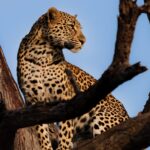
It’s always a privilege to witness the quiet milestones in the lives of our leopards, and recently we’ve been treated to a particularly special chapter. One of Tisela’s young daughters, Xiluva, now just under two years old, has begun to show encouraging signs of independence from her mother, whose name fittingly means Patience. Xiluva’s name means Flower, inspired by the delicate patterning in her eyes, and it’s a name that already feels well earned as she starts to bloom into her own.
Alongside her sister Xihangu, meaning Ice, a nod to the striking colour of her eyes, Xiluva has spent much of her time in the eastern reaches of the reserve. Recently, however, both sisters have been venturing further, hunting more confidently and exploring independently, a natural and crucial step as they prepare for life beyond their mother’s guidance. For Xiluva in particular, we’ve begun seeing her movements edging closer to the west, an area she may attempt to settle if space and opportunity allow.
As always with young leopards, the future holds a few possible paths. Xiluva may establish a territory closer to us here in the west, or she may choose to push further east and disappear into the vast wilderness of the greater Kruger landscape.
Whatever her journey holds, having been able to share these early moments of her independence with our guests at Leopard Hills is something truly special, a reminder that we’re not just witnessing sightings, but stories unfolding in real time.
Afternoon Kings of the Mabrak: A Face-to-Face Encounter with the Plains Camp Males
by Morné
Face to face with two dominant male lions is the kind of moment that stays with you for life, and this encounter with the Plains Camp males unfolded almost on the doorstep of Leopard Hills, along the Mabrak River.
It was one of those heavy Lowveld afternoons, the air still holding the day’s heat as the Mabrak River in front of Leopard Hills lay quiet in golden light. The sandy channels were etched with a maze of tracks from a night and morning full of movement while guests relaxed above in the comfort of the lodge, unaware that two of the most formidable lions in the Sabi Sand were somewhere between them and the riverine trees they admired. Down on the Mabrak, Advice and I were on foot, eyes on the sand instead of the view. From the first step, we stayed as quiet as possible and kept the wind in our favour, checking the breeze and adjusting our route so our scent drifted away from the thick riverine fringe where we suspected the lions were resting. Male lion tracks wove along the Mabrak in that purposeful yet unhurried way only confident territorial males move. The Plains Camp males, a powerful coalition that has shaped lion dynamics across parts of the Sabi Sand, had clearly been working the riverbed hard, searching for the coolest sand and deepest shade on blistering summer days.
Advice noted where one set of tracks climbed the bank toward a thick pocket of shade beneath a prominent tree, exactly the kind of hidden spot a big male would choose to rest. The other set continued restlessly in the soft sand, and we stayed with those, following the fresher spoor as it stitched a wandering line along the Mabrak. We rounded a bend where the riverbed narrowed and the banks rose, forming a natural funnel. There, the wandering tracks cut sharply toward the bank where the first male had climbed out, rejoining his brother’s trail, and as our gaze followed the spoor up the slope, it met two enormous male lions standing on the bank above us.
For a heartbeat, time held its breath. The Plains Camp males locked eyes with us, framed by afternoon light in the riverine vegetation. A low growl rumbled from one of the males.
Even then, the basics stayed the same: stay calm, stay quiet, keep the wind on our side. The lions turned in a fluid, powerful movement, sand kicking up behind their paws as they ran off the bank and disappeared behind a fold in the landscape, giving us the chance to back out slowly until the reassuring silhouette of our vehicle came into view.
Back in the vehicle, pulses settled as we relayed the encounter to our guests, who had been enjoying the luxury and safety of Leopard Hills just a short distance away. We drove back toward where we had last seen the lions, tyres rolling over the same sandy tracks we had followed on foot. Soon we saw them again: the same two Plains Camp males, now walking calmly down the Mabrak riverbed toward us, framed by pale sand and emerald riverine vegetation, their body language relaxed and utterly confident.
As they approached, one male lifted his head, his gaze briefly meeting ours. Cameras rattled, but there were also long moments of quiet as guests watched heavy paws compress the sand, muscles shift under tawny coats, and manes catch the afternoon light before the lions melted back into the shade further down the river.
Encounters like this are unscripted, born from wild animals moving through a wild landscape and from guides and trackers reading that landscape with respect and experience. Leopard Hills is known for intimate, close-up wildlife experiences from open vehicles and from suites overlooking the bush and riverbeds, but sometimes the Mabrak writes a story far more intense than any itinerary can promise.
To come face to face with the Plains Camp males on foot and then to share their relaxed, dominant walk with guests from the safety of the vehicle captures the essence of safari here: raw, unscripted, deeply humbling. It reminds us that while Leopard Hills offers every luxury, the true privilege lies just beyond the lodge deck, where the wild heart of the Sabi Sand beats along the Mabrak River under the African sun.
Stay With Us
If you’re interested in experiencing an awe-inspiring South African safari, please don’t hesitate to get in touch with our reservations desk at book@leopardhills.com.
Alternatively, click here and make use of the quick and seamless online booking process and start planning your ideal vacation today.
We look forward to welcoming you to Leopard Hills Private Game Reserve.